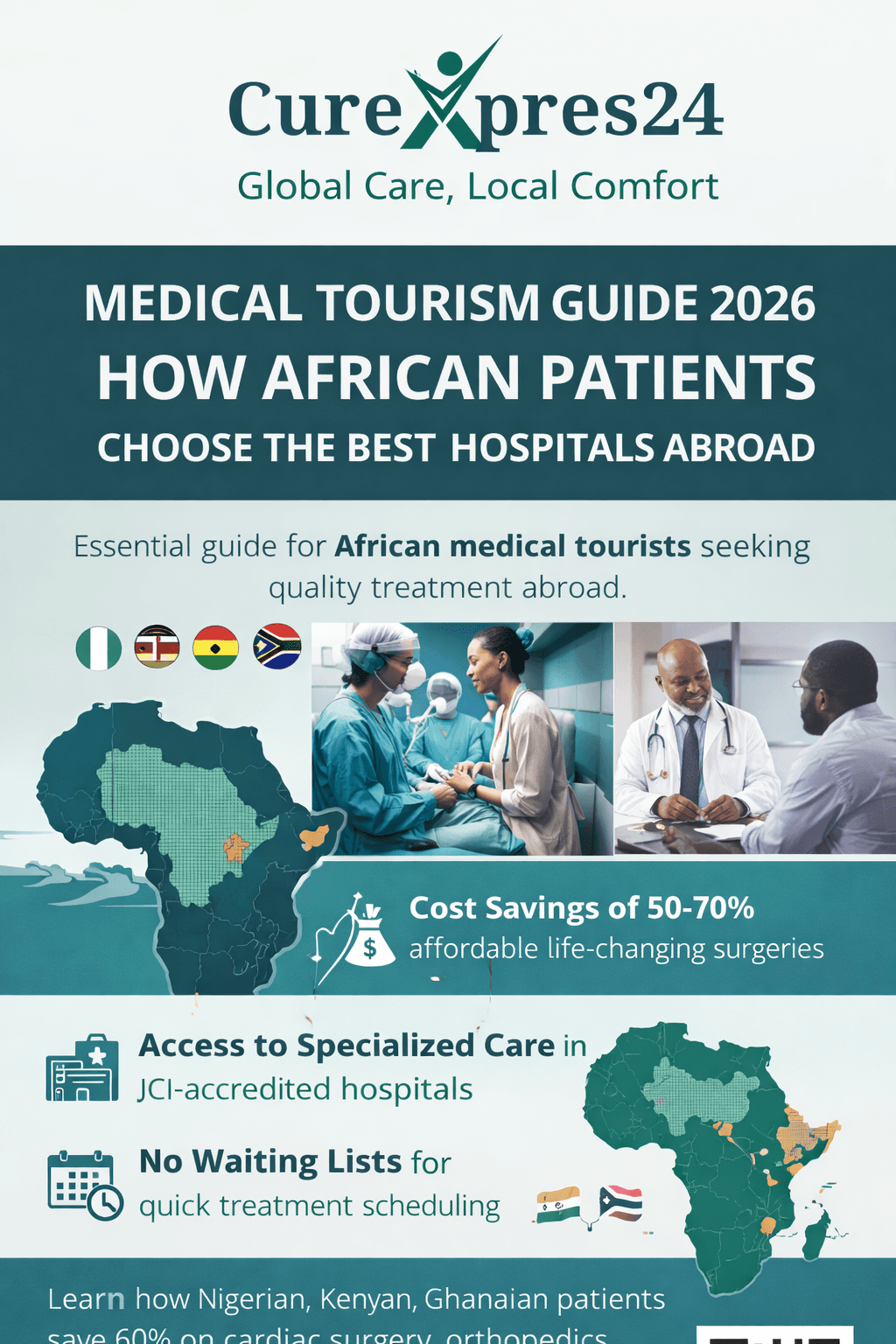
Every year, thousands of patients from Nigeria, Kenya, Ghana, South Africa, and across Africa travel abroad for medical treatment—seeking better quality care, advanced procedures unavailable at home, or significant cost savings. Whether you need cardiac surgery, orthopedic procedures, cancer treatment, or cosmetic surgery, choosing the right international hospital is the most critical decision in your medical journey.
This practical guide shows African medical tourists how to select safe, quality hospitals abroad while avoiding common pitfalls that could compromise your health and drain your finances.
Why African Patients Choose Medical Tourism
Medical tourism from Africa has grown dramatically because it solves real healthcare challenges:
Cost savings of 50-70% make life-changing procedures affordable. Cardiac bypass surgery costs $7,000-12,000 in India versus $60,000+ in Western countries or $25,000-40,000 in African private hospitals. Hip replacement in Turkey costs $8,000-14,000 compared to $35,000+ locally.
Access to specialized care draws patients to world-class facilities. Complex cardiac procedures, organ transplants, advanced cancer treatments, and specialized surgeries often aren't available across Africa. JCI-accredited hospitals in India, Turkey, and Thailand offer cutting-edge treatments with internationally-trained surgeons.
No waiting lists mean treatment happens when you need it. Instead of waiting 6-12 months for surgery in overburdened public systems, African patients can schedule procedures within 2-4 weeks at international hospitals.
Quality and technology attract patients to facilities with advanced equipment, proven outcomes, and success rates exceeding many African hospitals. International hospitals invest heavily in latest medical technology and maintain rigorous quality standards.
Step 1: Start With Clear Medical Documentation
Your hospital search begins with comprehensive medical records from your physician in Lagos, Nairobi, Accra, or wherever you're based. Compile your complete medical history, recent diagnostic tests (blood work, X-rays, MRI, CT scans), current medications and allergies, previous surgeries, and your doctor's treatment recommendations.
Have all documents professionally translated to English if they're in French, Arabic, or local languages—never use machine translation for medical records. Send these to prospective hospitals 2-4 weeks before travel so they can assess your case, recommend additional tests if needed, and provide accurate treatment plans and cost estimates.
Experienced medical tourism coordinators streamline this process by organizing your records properly, ensuring nothing's missing, and presenting your case effectively to multiple hospitals for comparison—saving you weeks of back-and-forth communication.
Step 2: Choose Your Destination Strategically
Different countries excel at different specialties and offer varying advantages for African patients:
India tops the list for cardiac surgery, orthopedics, cancer treatment, organ transplants, and fertility treatments. With the world's largest concentration of JCI-accredited hospitals, India offers exceptional quality at the lowest costs. Medical visa processing is straightforward for most African countries (3-5 days e-visa), direct flights operate from major African cities, and large African patient communities make it welcoming. Cities like Mumbai, Delhi, Bangalore, and Chennai host world-class facilities treating thousands of African patients annually.
Turkey excels in cosmetic surgery, hair transplants, dental implants, eye surgery (LASIK, cataract), and orthopedics. Istanbul's modern hospitals combine European standards with competitive pricing. Geographic proximity to Africa, direct flights from many African cities, and visa-friendly policies make Turkey increasingly popular, especially for North and East African patients.
Thailand offers comprehensive medical tourism infrastructure particularly strong in complex surgeries, cosmetic procedures, and premium healthcare experiences. Bangkok hospitals like Bumrungrad serve significant international patient volumes with proven expertise, though costs run slightly higher than India.
UAE (Dubai/Abu Dhabi) provides premium care closer to home with advanced oncology, cardiac, and fertility facilities. Higher costs than India or Turkey but eliminates long-haul flights for East African patients.
Consider flight accessibility from Lagos, Nairobi, Johannesburg, or your city; visa processing times for your passport; language support availability; and established experience treating African patients when selecting your destination.
Step 3: Verify Hospital Accreditation Rigorously
International accreditation is your primary quality assurance when evaluating hospitals you've never visited. Joint Commission International (JCI) accreditation represents the gold standard worldwide, certifying that facilities meet over 1,200 rigorous standards for patient safety, infection control, and clinical quality—comparable to leading Western hospitals.
Don't just accept accreditation claims on hospital websites. Verify credentials directly at www.jointcommissioninternational.org where you can search their database of accredited facilities. Also look for ISO certifications and national accreditations like India's NABH or Thailand's HA.
Accreditation matters intensely for African patients who can't easily inspect facilities before committing thousands of dollars and traveling thousands of miles. JCI certification means you can trust basic quality standards are met.
Medical tourism facilitators maintain current databases of accredited hospitals and verify credentials regularly, ensuring you're considering only quality-certified facilities—particularly valuable when you're unfamiliar with international healthcare accreditation systems.
Step 4: Research Your Surgeon's Credentials Thoroughly
Your outcome depends primarily on your surgeon's skill and experience. Investigate their educational background—where did they complete medical school and specialty training? Many top surgeons treating African patients trained at leading US, UK, or European institutions before returning to practice in India, Turkey, or Thailand.
Verify board certification in their specialty and international fellowships from recognized medical organizations. Most importantly, ask directly about their experience: How many times have they performed your specific procedure? What are their success and complication rates? Don't hesitate to request this information—reputable surgeons discuss their experience transparently.
Look for surgeons who publish in medical journals, present at international conferences, and maintain active involvement in their medical communities. These indicators suggest they stay current with evolving techniques and best practices.
Ensure your surgeon speaks English clearly for direct communication about your symptoms, treatment options, and recovery instructions—critical when you're far from home in Lagos or Nairobi and need to understand everything clearly.
Professional coordinators maintain detailed surgeon profiles including training backgrounds, procedure volumes, success rates, and feedback from previous African patients, helping you identify the most qualified specialists without weeks of independent research.
Step 5: Analyze Real Patient Experiences
Hospital websites show only positive testimonials. Expand your research to independent platforms: medical tourism forums, Facebook groups for Nigerian medical tourists or Kenyan healthcare seekers abroad, and healthcare review sites. Look for detailed accounts of the entire journey—visa process, airport pickup, hospital accommodation, staff attitudes, communication quality, and post-treatment support.
Pay special attention to experiences from fellow African patients who underwent your procedure. What do they say about pain management, cultural sensitivity, dietary accommodations (halal food, African cuisine), and family support? Did unexpected costs arise? How was follow-up care handled after returning home?
Video testimonials from Nigerian, Kenyan, or Ghanaian patients carry particular weight—they're harder to fabricate and provide authentic insights. Don't ignore negative reviews but analyze patterns. One or two complaints among hundreds of positive experiences may reflect individual circumstances, but repeated mentions of poor communication, billing surprises, or specific complications demand serious attention.
Request contact with past African patients if hospitals have treated them. Speaking with someone who walked your exact path provides invaluable practical wisdom no online research can match.
Step 6: Understand Complete Costs Transparently
Request itemized estimates in US dollars breaking down procedure fees, surgeon fees, anesthesia, hospital stay (per day), medications, pre-operative tests, and follow-up appointments. Beware of vague quotes without specifics—this signals potential for surprise charges.
Budget comprehensively beyond medical costs: international flights from your African city ($400-1,500), accommodation for you and any companion ($30-150 per night), local transportation, meals, visa fees ($50-200), travel insurance, medications, and contingency funds. A smart rule: budget your quoted medical costs plus 50% for indirect expenses.
Clarify payment schedules (typically 30-50% deposit, balance before discharge), accepted payment methods (wire transfer, credit cards, cash), and currency considerations—exchange rate fluctuations between Naira, Shilling, Rand and USD/EUR can impact final costs.
Get everything in writing: exactly what's included, payment terms, cancellation policies, what happens if complications require additional treatment, and any warranties offered. Verbal assurances mean nothing if problems arise.
Medical tourism companies negotiate package prices with hospitals (often securing 10-15% better rates than individual patients), provide transparent all-inclusive quotes eliminating financial surprises, and ensure you understand every cost component—removing the stress of navigating complex international healthcare pricing.
Step 7: Assess International Patient Support Services
Quality international patient departments make the difference between smooth journeys and stressful ordeals for African medical tourists. Evaluate how quickly hospitals respond to inquiries—slow, vague responses before you've committed often indicate similar challenges after arrival.
Does the hospital assign dedicated case managers who speak English or French? Can they arrange airport pickup in Mumbai or Istanbul? Do they help with medical visa invitation letters for Nigerian or Kenyan passport holders? Will they provide accommodation near the hospital, local transportation, SIM cards, and interpreter services throughout your stay?
Telemedicine capabilities for pre-travel virtual consultations let you meet your surgeon, discuss treatment plans, and assess comfort level without preliminary trips. Post-treatment telemedicine follow-ups reduce return visit needs while ensuring proper recovery monitoring after you're back in Lagos, Nairobi, or home.
Verify 24/7 emergency support—if complications arise after returning to Africa, can you reach someone immediately? How do they coordinate with your home physician? Will they ship medications internationally if needed?
CureXpress24 serves as your comprehensive support system, providing dedicated case managers who understand both African patient needs and international hospital systems, ensuring seamless coordination from initial inquiry through complete recovery—particularly valuable for first-time medical tourists navigating unfamiliar healthcare environments.
Step 8: Plan for Contingencies and Complications
Hope for the best but plan for unexpected scenarios, especially when thousands of miles from home. Understand the hospital's complication management protocols—what level of intensive care can they provide? Where would you be transferred if more specialized care is needed? Who covers those costs?
Consider specialized medical tourism insurance (not regular travel insurance) that covers treatment complications, extended stays due to medical necessity, and emergency medical evacuation back to Nigeria or Kenya. While adding $300-800 to costs, this provides crucial financial protection and peace of mind.
Coordinate with your home doctor before traveling. Share your treatment plan and operative reports so they can provide seamless follow-up care when you return to Africa. Establish clear communication channels between your local physician and overseas hospital.
Build 30-50% extra time into travel plans beyond minimum estimates. If the hospital says 7 days, budget for 10-11 days in-country. Book flexible return flights that can be changed without major penalties. Recovery sometimes takes longer than expected, and you don't want financial pressure forcing you home before you're medically cleared for long-haul flights.
Step 9: Prepare Thoroughly Before Departure
Handle visa applications 3-4 weeks before travel—processing times from African countries can be unpredictable. Gather required documents: hospital invitation letters, medical reports, proof of funds, return flight bookings, and accommodation confirmations.
Notify your bank about international transactions so they don't freeze your accounts while you're abroad. Carry multiple payment methods: international credit cards, cash in US dollars, and debit cards.
Pack strategically: compression garments if recommended, loose comfortable clothing accommodating bandages, front-button shirts if you'll have limited mobility, medications from home, mobility aids if needed, and comfort items for recovery.
Arrange affairs at home: pay bills or set up autopay, arrange care for children or pets, brief family on handling emergencies, and ensure you have sufficient work leave (remember that 30-50% buffer).
Make detailed communication plans: ensure your phone works internationally (consider local SIM cards versus expensive roaming), download WhatsApp and translation apps, and share complete itinerary with multiple family members including hospital contact details and your case manager's information.
Professional facilitators like CureXpress24 handle most preparation logistics: visa documentation assistance, optimal flight bookings from African cities, airport pickup coordination, appropriate accommodation near hospitals, medical record organization and translation, and comprehensive pre-travel checklists—ensuring nothing falls through the cracks during this critical phase.
Making Your Decision: Your Partner in Medical Tourism
Choosing the right hospital abroad requires research, planning, and careful verification—but this investment protects your health and ensures successful outcomes. Don't rush the decision or let costs alone drive your choice. Small savings from cheaper facilities pale against catastrophic costs of complications or substandard care.
Prioritize hospitals demonstrating: JCI accreditation and proven quality, experienced surgeons with verifiable credentials and substantial procedure volumes, transparent communication respecting your concerns, comprehensive African patient support including visa assistance and cultural sensitivity, and clear written policies on all costs and complications.
Medical tourism offers African patients extraordinary opportunities—accessing world-class cardiac surgery, successful transplants, pain-free joint replacements, effective cancer treatment, and transformative procedures at 50-70% cost savings compared to Western countries. However, navigating international healthcare systems, verifying credentials, managing visas, coordinating logistics, and ensuring continuity of care can overwhelm patients already dealing with serious health conditions.
Why African Patients Choose CureXpress24
CureXpress24 was founded specifically to serve medical tourists across Africa, understanding the unique challenges patients from Nigeria, Kenya, Ghana, Tanzania, South Africa, and other African nations face seeking treatment abroad. We're not a booking service—we're your dedicated healthcare partner throughout your entire medical journey.
We maintain vetted partnerships with JCI-accredited hospitals across India, Turkey, Thailand, UAE, and Malaysia. We personally verify facilities, surgeon credentials, and outcome data. We negotiate transparent package prices, handle medical visa applications for African passports, arrange flights from Lagos, Nairobi, Johannesburg, and other African cities, coordinate airport pickup and accommodation, organize and translate medical records, provide 24/7 case manager support, and coordinate post-treatment care with your home doctors.
Thousands of African patients have trusted CureXpress24 for successful international treatment—Nigerian cardiac surgery patients, Kenyan transplant recipients, Ghanaian orthopedic patients, South African cosmetic surgery travelers, and Ethiopian cancer patients. In every case, we provided not just medical coordination but comprehensive support, cultural understanding, and peace of mind
We offer free initial consultations for African patients exploring medical tourism. We'll review your needs, discuss suitable destinations, provide honest cost estimates, explain the complete process, and answer all questions with no pressure or obligation.
Your health deserves expert support. While this guide provides the knowledge to make informed decisions, having experienced professionals handle complex logistics, verify quality, negotiate costs, and support you throughout allows you to focus on recovery rather than coordination stress.
Arrange care with clarity
Talk through what your family needs.
Get honest guidance, a written care plan, and a clear next step from the CureXpress24 team.
Book a free consultation