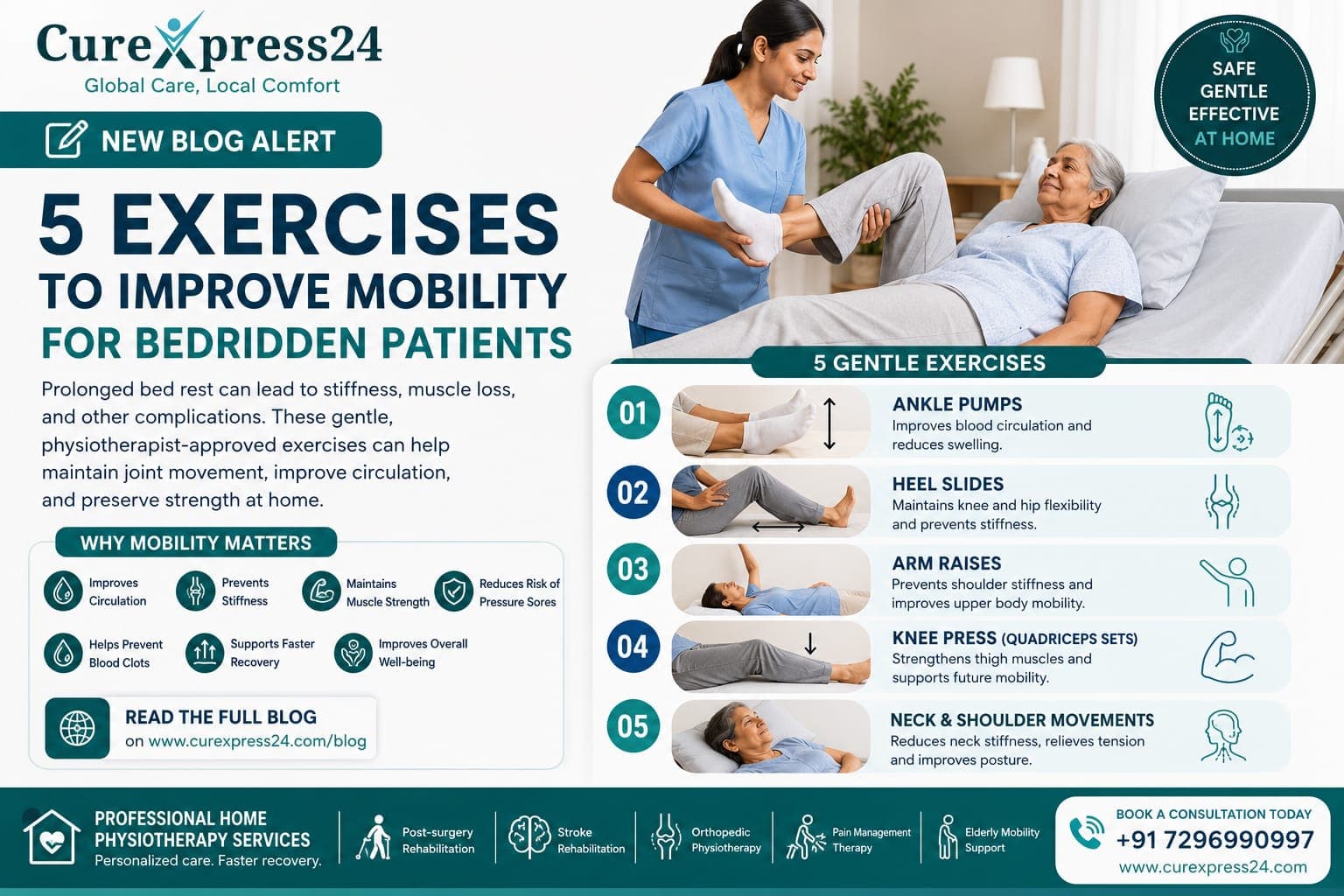
Prolonged bed rest doesn't just limit movement—it can affect overall health, independence, and recovery. Whether a patient is recovering from surgery, managing a chronic illness, or receiving long-term home care, staying physically active within safe limits is essential.
With the right guidance, caregivers can help bedridden patients perform simple exercises that improve blood circulation, maintain joint flexibility, reduce muscle stiffness, and prevent complications such as pressure sores and muscle atrophy.
In this article, we'll explore five safe, gentle exercises recommended by physiotherapists that can be performed at home.
Why Mobility Matters for Bedridden Patients
Remaining in bed for extended periods can lead to several health concerns, including:
Joint stiffness and reduced flexibility
Muscle weakness and loss of strength
Poor blood circulation
Increased risk of pressure ulcers (bed sores)
Swelling in the legs and feet
Higher risk of blood clots
Reduced lung function
Loss of independence during recovery
Regular movement—even passive movement assisted by a caregiver—helps reduce these risks and supports a faster, healthier recovery.
Before You Begin
Before starting any exercise routine:
Always consult the patient's doctor or physiotherapist.
Perform exercises slowly and gently.
Stop immediately if the patient experiences pain, dizziness, or shortness of breath.
Ensure the patient is comfortable and properly supported.
Encourage normal breathing throughout each movement.
1. Ankle Pumps
Benefits
Improves blood circulation
Reduces swelling
Helps prevent blood clots (Deep Vein Thrombosis)
How to Perform
Ask the patient to point their toes downward.
Then slowly pull the toes upward toward the body.
Repeat in a smooth, controlled motion.
Repetitions: 10–15 on each foot, 2–3 times daily.
2. Heel Slides
Benefits
Maintains knee and hip flexibility
Prevents stiffness
Improves lower-limb mobility
How to Perform
Keep one leg straight.
Slowly slide the heel toward the hips while bending the knee.
Return the leg to the starting position.
Repeat with the other leg.
If the patient cannot move independently, the caregiver may gently assist.
Repetitions: 10 per leg.
3. Arm Raises and Shoulder Mobility
Benefits
Prevents shoulder stiffness
Maintains upper-body mobility
Improves circulation
How to Perform
Raise one arm toward the ceiling.
Continue lifting overhead as comfortably as possible.
Slowly lower the arm.
Repeat with the other arm.
If needed, caregivers can provide gentle assistance.
Repetitions: 8–10 per arm.
4. Knee Press (Quadriceps Sets)
Benefits
Strengthens thigh muscles
Helps maintain leg strength
Supports future standing and walking
How to Perform
Keep the leg straight.
Tighten the muscles on the front of the thigh.
Press the knee gently downward into the bed.
Hold for 5 seconds.
Relax.
Repetitions: 10–15 per leg.
5. Gentle Neck and Shoulder Movements
Benefits
Reduces neck stiffness
Improves posture
Relieves muscle tension
How to Perform
Slowly turn the head left and right.
Tilt the head toward each shoulder.
Gently roll the shoulders backward and forward.
Avoid forcing any movement beyond a comfortable range.
Repetitions: 5–10 in each direction.
Additional Tips for Caregivers
Simple daily habits can make a significant difference:
Reposition the patient every 2–3 hours to reduce pressure on the skin.
Keep the patient hydrated.
Encourage deep breathing exercises several times a day.
Use pillows to support joints and improve comfort.
Maintain good nutrition to preserve muscle strength.
Follow the exercise schedule consistently.
When Should You Stop the Exercises?
Seek medical advice if the patient experiences:
Severe pain during movement
Sudden swelling
Difficulty breathing
Chest pain
Dizziness or fainting
Unusual fatigue
New numbness or weakness
Safety should always come first.
The Role of Home Physiotherapy
While these exercises are beneficial, every patient has unique medical needs. A qualified home physiotherapist can:
Assess mobility levels
Develop a personalized exercise program
Improve strength and balance safely
Reduce pain
Monitor recovery progress
Train family members in proper caregiving techniques
Professional physiotherapy at home also provides reassurance that exercises are being performed correctly and safely.
How CureXpress24 Can Help
At CureXpress24, we understand that recovering at home requires compassionate, professional support. Our experienced physiotherapists provide personalized home visits designed to help patients regain mobility, reduce pain, and improve their quality of life.
Our Home Physiotherapy Services include:
Post-surgery rehabilitation
Stroke rehabilitation
Orthopedic physiotherapy
Neurological rehabilitation
Elderly mobility support
Pain management therapy
Strength and balance training
Exercise programs tailored to individual recovery goals
Whether your loved one is recovering after surgery, managing a chronic condition, or requires long-term home care, our team is committed to delivering safe, effective physiotherapy in the comfort of your home.
Final Thoughts
Being bedridden does not mean giving up on movement. Even small, gentle exercises performed consistently can help maintain mobility, improve circulation, reduce discomfort, and support a quicker recovery.
With proper guidance from healthcare professionals and dedicated caregivers, these simple daily movements can make a meaningful difference in a patient's health, comfort, and overall well-being.
If you or a loved one requires professional physiotherapy at home, the experienced team at CureXpress24 is here to support every step of the recovery journey.
Book a Home Physiotherapy Consultation today and help your loved one move toward a healthier, more comfortable recovery.
Arrange care with clarity
Talk through what your family needs.
Get honest guidance, a written care plan, and a clear next step from the CureXpress24 team.
Book a free consultation