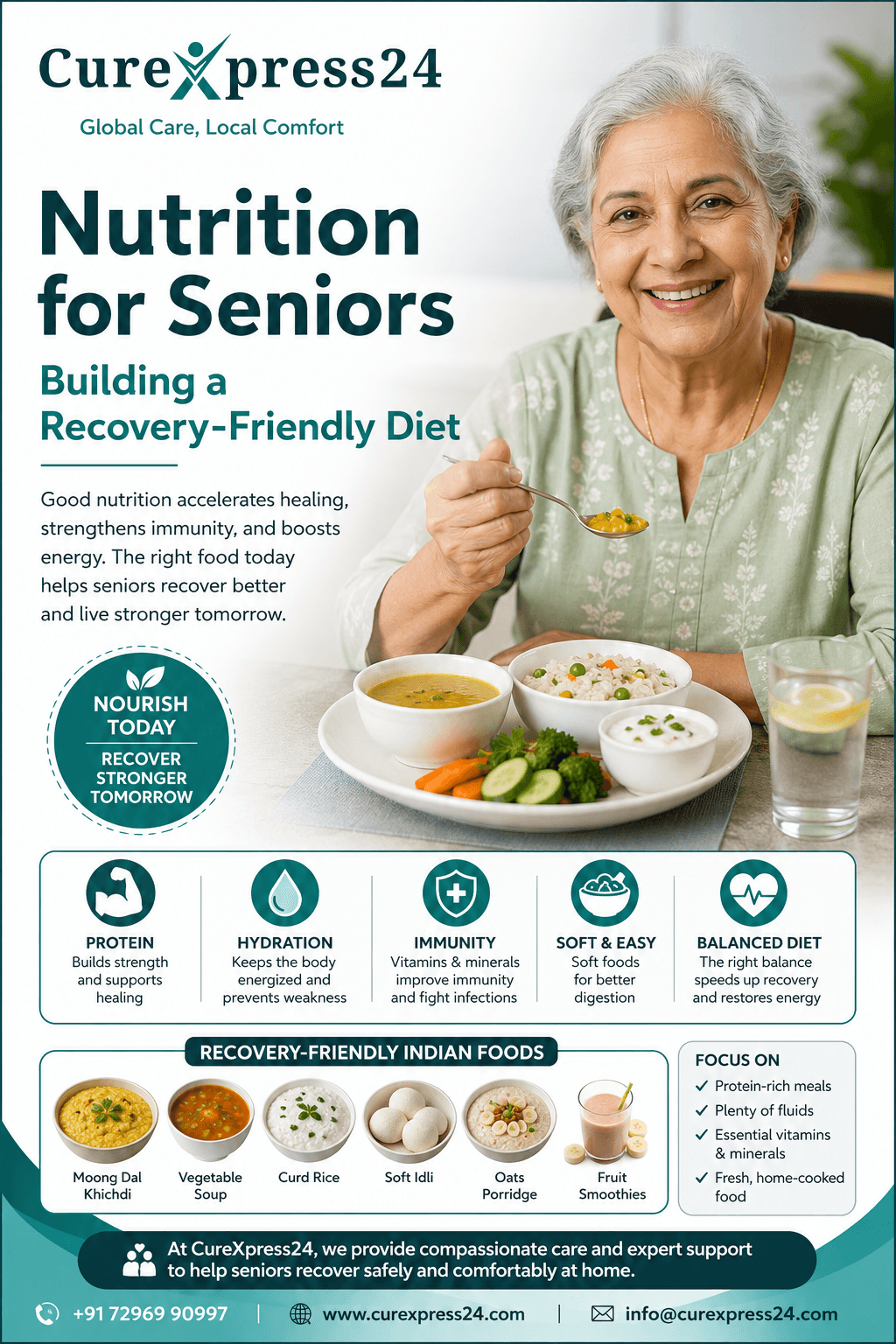
Recovering from an illness, surgery, or a prolonged hospital stay can be challenging for anyone—but for older adults, the recovery process often takes longer. As we age, our bodies naturally lose muscle mass, our immune system weakens, and healing slows down. During this time, nutrition becomes one of the most powerful medicines.
A well-balanced, nutrient-rich diet can help seniors regain strength, improve immunity, reduce the risk of infections, and speed up recovery. Whether your loved one is recovering at home after surgery or managing a chronic condition, the right food choices can make a significant difference.
In this guide, we'll discuss what older adults should eat during recovery, common nutritional deficiencies, hydration tips, and practical Indian meal ideas that are both healthy and easy to digest.
Why Nutrition Matters During Recovery
Recovery requires the body to repair damaged tissues, fight infections, and restore lost energy. All these processes demand additional nutrients.
Without proper nutrition, seniors may experience:
Delayed wound healing
Muscle loss and weakness
Increased fatigue
Reduced immunity
Higher risk of infections
Poor appetite leading to further weight loss
Longer recovery periods
A nutritious diet helps maintain muscle strength, supports mobility, improves mental wellbeing, and reduces complications after illness or surgery.
Nutrients Every Senior Needs During Recovery
1. Protein: The Building Block of Healing
Protein is essential for repairing muscles, healing wounds, and maintaining immunity.
Many seniors don't consume enough protein because of reduced appetite, chewing difficulties, or dietary habits.
Good Indian Protein Sources
Dal and lentils
Moong dal khichdi
Paneer
Curd
Greek yogurt
Milk
Eggs
Fish
Chicken
Soy products
Tofu
Sprouts
Chana
Rajma
Aim to include a protein source in every meal.
2. Stay Hydrated
Dehydration is one of the most common reasons elderly patients experience weakness, dizziness, constipation, urinary infections, and confusion.
Unfortunately, seniors often don't feel thirsty even when they need fluids.
Healthy Hydration Options
Water
Coconut water
Buttermilk
Lemon water
Vegetable soups
Clear broths
Fresh fruit-infused water
Homemade ORS (when recommended)
Limit sugary beverages and excessive caffeinated drinks.
3. Healthy Carbohydrates for Energy
Recovery increases energy requirements.
Choose complex carbohydrates instead of refined foods.
Examples include:
Oats
Brown rice
Millets
Whole wheat roti
Sweet potatoes
Dalia
Poha
Idli
These provide sustained energy without causing rapid spikes in blood sugar.
4. Healthy Fats
Healthy fats reduce inflammation and support healing.
Include:
Almonds
Walnuts
Flaxseeds
Chia seeds
Groundnuts
Olive oil
Mustard oil
Ghee (in moderation)
Vitamins and Minerals That Speed Up Recovery
Vitamin C
Supports collagen production and wound healing.
Sources:
Oranges
Amla
Guava
Kiwi
Tomatoes
Capsicum
Lemon
Vitamin D
Essential for bone strength and immunity.
Many elderly individuals have Vitamin D deficiency.
Sources:
Morning sunlight
Fortified milk
Eggs
Fatty fish
Supplements (only if prescribed)
Calcium
Necessary for healthy bones and muscle function.
Sources:
Milk
Paneer
Yogurt
Sesame seeds
Ragi
Green leafy vegetables
Iron
Low iron levels can lead to fatigue and slower recovery.
Sources:
Spinach
Beetroot
Jaggery (in moderation)
Lentils
Beans
Lean meat
Pair iron-rich foods with Vitamin C sources for better absorption.
Zinc
Important for wound healing and immunity.
Sources:
Pumpkin seeds
Nuts
Seafood
Chickpeas
Whole grains
Soft Foods for Seniors with Chewing or Swallowing Difficulties
After surgery or illness, many seniors struggle with chewing.
Soft, nutrient-dense foods are easier to consume.
Good options include:
Moong dal khichdi
Vegetable soup
Dal soup
Soft idli
Upma
Oats porridge
Dalia
Mashed sweet potatoes
Mashed bananas
Curd rice
Soft paneer bhurji
Steamed fish
Scrambled eggs
Fruit smoothies
Yogurt with fruits
Avoid spicy, oily, or very hard foods if swallowing is difficult.
Common Nutritional Deficiencies in Older Adults
Many elderly people unknowingly suffer from nutritional deficiencies.
The most common include:
Protein deficiency
Vitamin D deficiency
Vitamin B12 deficiency
Iron deficiency
Calcium deficiency
Folate deficiency
Signs may include:
Constant fatigue
Weak muscles
Slow wound healing
Hair loss
Frequent infections
Poor balance
Memory problems
Loss of appetite
Regular health check-ups can help detect deficiencies early.
Sample Recovery-Friendly Indian Meal Plan
Early Morning
Warm water
Soaked almonds (4–5)
One fruit
Breakfast
Vegetable oats
Boiled egg or paneer
Milk
Mid-Morning
Coconut water
Seasonal fruit
Lunch
Dal
Brown rice or chapati
Mixed vegetables
Curd
Evening Snack
Buttermilk
Roasted chana
Fruit
Dinner
Moong dal khichdi
Vegetable soup
Soft paneer or grilled fish
Bedtime
Warm milk with turmeric (if suitable)
Foods to Limit During Recovery
Recovery isn't only about eating more—it’s also about avoiding foods that may slow healing.
Try to reduce:
Deep-fried foods
Sugary snacks
Soft drinks
Excess salt
Highly processed foods
Packaged snacks
Excessive sweets
Alcohol
Smoking (if applicable)
Tips for Caregivers
Family members and caregivers play an important role in maintaining proper nutrition.
Here are a few practical tips:
Offer small, frequent meals instead of three large meals.
Include protein with every meal.
Encourage regular hydration throughout the day.
Make meals colorful and appealing.
Monitor weight changes.
Keep healthy snacks easily accessible.
Follow dietary restrictions advised by the doctor for conditions like diabetes, kidney disease, or heart disease.
Consult a dietitian if appetite remains poor or weight loss continues.
When to Seek Medical Advice
Contact your healthcare provider if your loved one experiences:
Rapid weight loss
Persistent poor appetite
Difficulty swallowing
Repeated vomiting
Signs of dehydration
Severe weakness
Ongoing constipation or diarrhea
Delayed wound healing
Early intervention can prevent complications and support a smoother recovery.
Recovery Is Built One Meal at a Time
Nutrition is more than just food—it's a key part of healing. For seniors recovering from illness or surgery, every balanced meal contributes to stronger immunity, healthier muscles, improved energy, and faster recovery.
By focusing on protein-rich foods, proper hydration, essential vitamins, and easy-to-digest Indian meals, families can help their loved ones regain independence and enjoy a better quality of life.
At CureXpress24, we understand that recovery extends beyond hospital walls. Our experienced caregivers, nurses, physiotherapists, and home healthcare professionals work closely with families to support seniors with personalized care, medication management, mobility assistance, and daily nutrition guidance—helping them recover safely and comfortably in the familiar surroundings of home.
Frequently Asked Questions (FAQs)
1. What is the best diet for seniors recovering from surgery?
A recovery diet should be rich in protein, vitamins, healthy fats, whole grains, and fluids. Foods like dal, eggs, paneer, curd, soups, khichdi, fruits, and vegetables support healing and strengthen immunity.
2. How much protein does an elderly person need during recovery?
Protein needs vary based on health status and body weight. Many older adults recovering from illness or surgery benefit from a higher protein intake, but the exact amount should be determined by their doctor or a registered dietitian.
3. Why is hydration important for elderly patients?
Adequate hydration helps prevent dehydration, constipation, urinary tract infections, dizziness, and confusion. It also supports nutrient transport and overall healing.
4. Which foods are easiest for seniors who have difficulty chewing?
Soft foods such as moong dal khichdi, vegetable soups, curd rice, oats porridge, mashed potatoes, soft idli, scrambled eggs, and fruit smoothies are generally easier to eat while still providing essential nutrients.
5. Can nutrition improve recovery at home?
Yes. A balanced diet combined with proper medical care, physiotherapy when needed, and caregiver support can significantly improve strength, immunity, wound healing, and overall recovery outcomes.
SEO Meta Title: Nutrition for Seniors: Building a Recovery-Friendly Diet | CureXpress24
Meta Description: Learn how the right nutrition helps seniors recover faster after illness or surgery. Discover protein-rich foods, hydration tips, common deficiencies, and recovery-friendly Indian meal ideas from CureXpress24.
Arrange care with clarity
Talk through what your family needs.
Get honest guidance, a written care plan, and a clear next step from the CureXpress24 team.
Book a free consultation