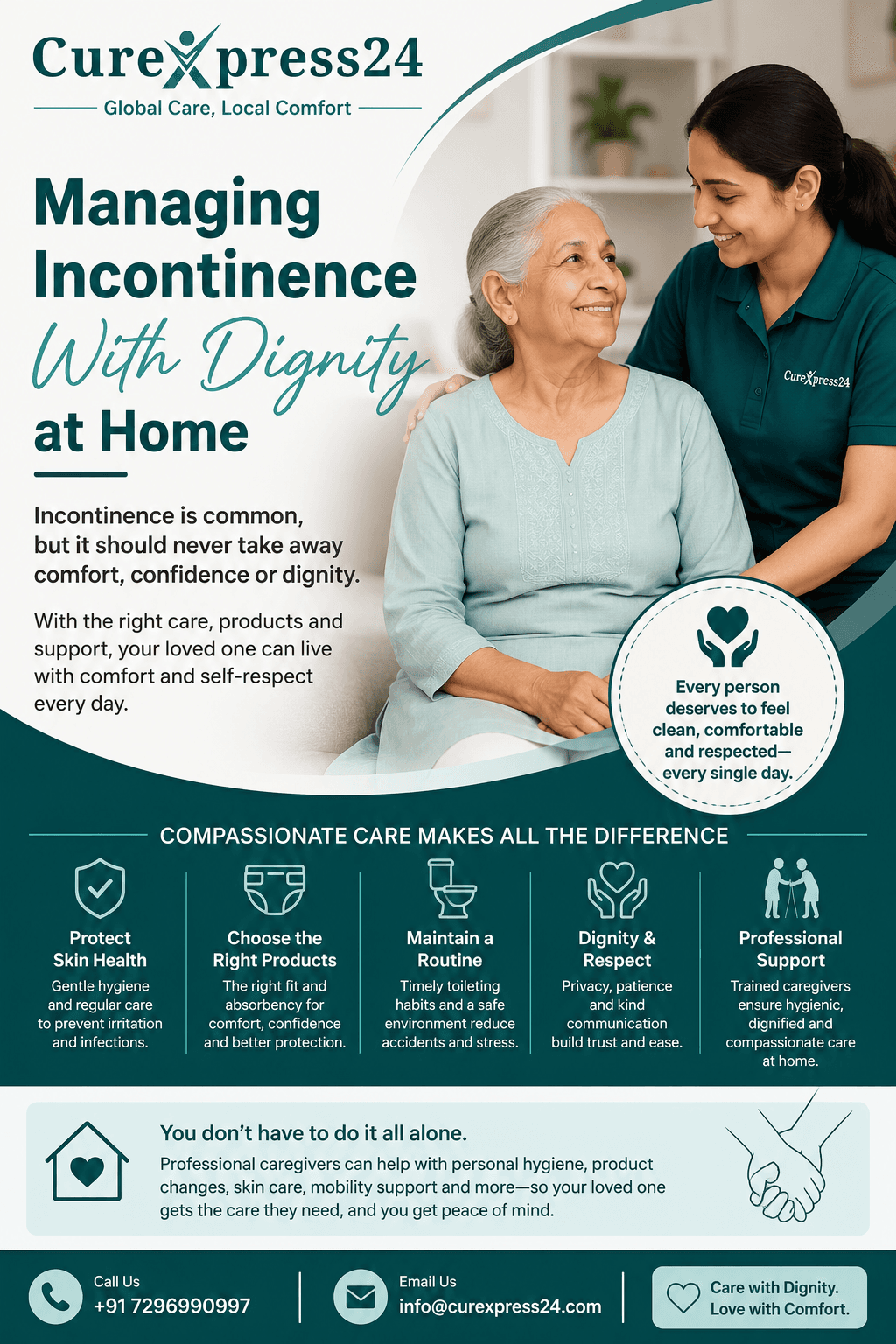
Incontinence is a common health concern, especially among older adults, but it is also one of the most sensitive and difficult topics to talk about.
For many elderly individuals, losing control over bladder or bowel movements can feel embarrassing and frustrating. It may affect their confidence, independence, and willingness to participate in everyday activities. Some may even avoid talking about the problem because they feel ashamed or worry about becoming a burden on their family.
For family members, caring for a loved one with incontinence can also bring uncertainty. You may wonder how often products should be changed, how to prevent skin problems, how to maintain hygiene, or how to provide help without making your loved one feel uncomfortable.
The most important thing to remember is this: incontinence does not take away a person's dignity. How we respond to it can help protect that dignity every single day.
With patience, the right routine, and compassionate support, incontinence can be managed comfortably at home while helping your loved one feel respected, clean, and confident.
Understanding Incontinence in Older Adults
Incontinence simply means the involuntary loss of bladder or bowel control. It can range from occasional urine leakage to a more frequent need for support with toileting and hygiene.
There can be many reasons for incontinence in older adults. Age-related changes, reduced mobility, certain medications, urinary infections, chronic health conditions, or difficulty reaching the bathroom on time may all play a role.
It is important not to assume that incontinence is “just a normal part of ageing.” New or sudden changes should be discussed with a healthcare professional, especially when accompanied by pain, fever, confusion, blood in the urine, or other unusual symptoms.
Understanding the reason behind the problem can sometimes help improve its management.
The Emotional Side Matters Too
Incontinence is not only a hygiene issue. It can also have a significant emotional impact.
An elderly person may feel embarrassed about asking for help. They may worry about an unpleasant smell, an accident in public, or being judged by their family members. Sometimes, they may become withdrawn or refuse assistance simply because they want to maintain their privacy.
Family members can make a meaningful difference by changing the way they communicate and provide care.
Avoid making jokes, expressing frustration, or discussing accidents in front of other people. Instead, speak calmly and privately. Ask your loved one how they would prefer to receive help and involve them in decisions whenever possible.
Simple words can make a difference. Instead of saying, “You made a mess again,” focus on reassurance: “It’s okay, let’s get you comfortable and cleaned up.”
The goal should never be to make someone feel dependent. The goal is to provide the support they need while preserving as much independence as possible.
Creating a Comfortable Toileting Routine
A regular routine can help reduce anxiety and make incontinence easier to manage.
Encourage your loved one to use the toilet at regular intervals rather than waiting until the urge becomes urgent. Depending on their individual needs, this may mean offering gentle reminders throughout the day.
The bathroom should also be as safe and accessible as possible. Good lighting, clear walking paths, supportive handrails, and easy-to-remove clothing can make reaching and using the toilet easier.
For someone with limited mobility, keeping a bedside commode or other appropriate toileting support nearby may reduce the risk of accidents and falls.
It is also important to be patient. Rushing someone during toileting can increase anxiety and make the experience more uncomfortable.
Choosing the Right Incontinence Products
The right product can make a significant difference to comfort, confidence, and hygiene.
Depending on the person's level of mobility and the severity of incontinence, options may include absorbent pads, protective underwear, adult diapers, or other specialised products.
When choosing a product, consider:
The level and frequency of leakage
Whether the person is mobile or bedridden
Comfort and proper fit
Ease of changing the product
The ability of the product to keep moisture away from the skin
A product that is too tight can cause discomfort, while one that is too loose may not provide adequate protection. It may take some time to find the option that works best for your loved one's individual needs.
Most importantly, products should be changed regularly. Wearing a wet or soiled product for too long can cause discomfort and increase the risk of skin irritation.
Protecting the Skin
Good skin care is one of the most important parts of managing incontinence.
Frequent exposure to moisture can cause redness, irritation, itching, or skin breakdown. This can be painful and may increase the risk of infection.
Whenever possible, clean the affected area gently after an episode of incontinence. Use mild, suitable cleansing products and avoid harsh rubbing. Pat the skin dry carefully and make sure the area is not left damp before putting on a fresh product.
If recommended by a healthcare professional, a suitable barrier product may also help protect the skin from repeated exposure to moisture.
Regularly check for redness, rashes, sores, or broken skin. Early attention can help prevent a small problem from becoming more serious.
Encourage Independence Wherever Possible
Receiving help does not mean losing all independence.
If your loved one is able to participate in parts of their personal care safely, encourage them to do so. They may be able to choose their clothing, use the toilet with minimal assistance, clean themselves partially, or let you know when they need help.
Allowing a person to remain involved in their own care can protect their confidence and sense of control.
Even when someone requires significant assistance, you can still give them choices. Ask whether they would like help now or in a few minutes, which clothing they would prefer, or how they would like their care routine to be managed.
Small choices can help preserve a person's sense of independence.
Maintaining Hygiene Without Making Care Feel Embarrassing
Personal hygiene support should always be handled with privacy and respect.
Before providing assistance, explain what you are going to do. Keep the person covered as much as possible and only expose the area that needs to be cleaned. If possible, close doors and curtains to maintain privacy.
Try to establish a calm and consistent routine. This can help your loved one know what to expect and reduce feelings of embarrassment.
Family caregivers should also remember that accidents can happen to anyone. Responding calmly can make a difficult moment feel much less stressful for the person receiving care.
Supporting Hydration and Everyday Health
Some people reduce their water intake because they are worried about frequent trips to the bathroom or accidents. However, drinking too little water can sometimes create other health concerns.
Unless a healthcare professional has advised fluid restrictions, encourage regular hydration and follow appropriate medical guidance for your loved one's individual needs.
It can also be helpful to pay attention to patterns. For example, you may notice that leakage occurs at particular times of the day or after certain activities. Keeping a simple record can help families and healthcare professionals better understand the situation.
Changes in diet, medications, mobility, or general health may also influence continence, so it is worth discussing persistent concerns with a qualified healthcare professional.
When Family Caregivers Need Additional Support
Caring for a loved one with incontinence can be emotionally and physically demanding, especially when care is needed several times a day or during the night.
Family members may already be balancing work, children, household responsibilities, and their own wellbeing. Over time, providing intimate personal care can become exhausting—not because there is a lack of love, but because caregiving can require time, energy, and specialised support.
Professional caregivers can help families manage these responsibilities while ensuring that the elderly person receives respectful and consistent care.
At CureXpress24, trained caregivers can provide support with personal hygiene, changing incontinence products, maintaining cleanliness, assisting with mobility, and helping create a comfortable daily routine.
Professional support does not replace the love and presence of family. Instead, it can help with the demanding day-to-day care tasks so family members can spend more meaningful, relaxed time with their loved ones.
Caring With Dignity Is Caring With Respect
Incontinence can be a difficult experience, but it should never become a reason for an elderly person to feel ashamed, isolated, or less valued.
The way we respond matters.
A calm voice, a little patience, proper hygiene, and respect for privacy can make a significant difference to someone's comfort and emotional wellbeing. For families, asking for help when caregiving becomes overwhelming is also an important part of providing good care.
At the heart of incontinence care is a simple principle: every person deserves to feel clean, comfortable, respected, and dignified—at every stage of life.
With the right support, families can manage incontinence at home with greater confidence while helping their loved ones continue to live with comfort, dignity, and peace of mind.
Need compassionate support for an elderly loved one at home?
CureXpress24 can help families connect with trained caregivers who can provide personalised assistance with daily living and personal care needs, helping your loved one receive the support they need in the comfort of home.
Arrange care with clarity
Talk through what your family needs.
Get honest guidance, a written care plan, and a clear next step from the CureXpress24 team.
Book a free consultation