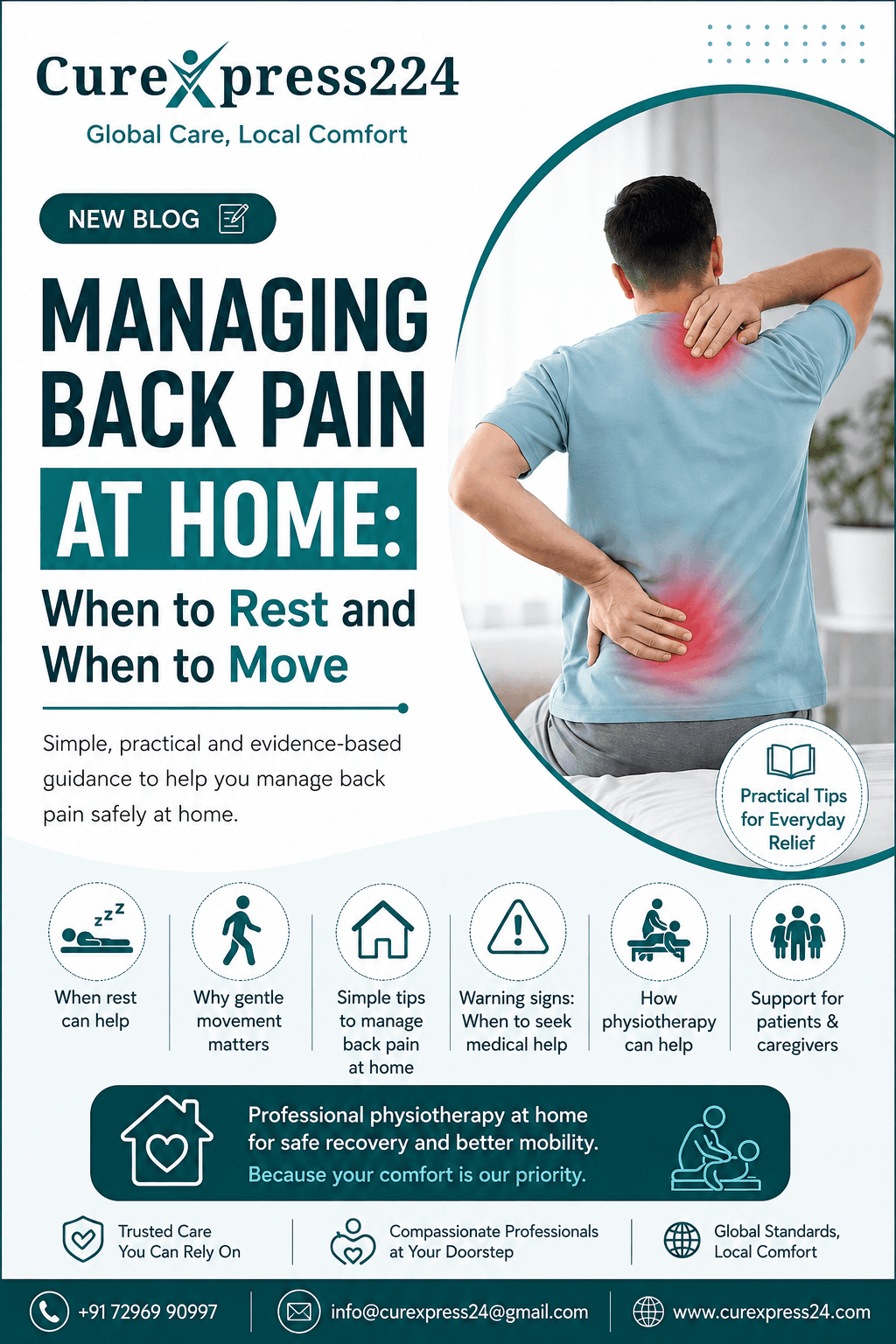
Back pain can make even the simplest daily activities—getting out of bed, sitting comfortably, walking, or bending down—feel difficult. It is also one of the most common reasons people seek physiotherapy. When pain starts, one question often creates confusion for both patients and their families:
“Should I rest completely, or should I keep moving?”
The answer is usually somewhere in between.
While rest may be helpful for a short period when pain is severe, staying in bed for too long can sometimes make the body feel stiffer and weaker. On the other hand, pushing through severe pain or performing the wrong movements may also worsen symptoms.
Understanding when to rest, when to move, and when to seek professional guidance can help you manage back pain more confidently and safely at home.
Important: Back pain can have many causes. The information in this article is intended for general awareness and should not replace an assessment by a qualified healthcare professional.
Understanding Back Pain: Why It Can Feel Different for Everyone
Back pain is not always the same. For some people, it may begin suddenly after lifting something heavy or making an awkward movement. Others may experience a gradual ache that develops because of prolonged sitting, reduced activity, poor movement habits, or underlying physical changes.
Back pain may be:
Acute, meaning it has started recently
Persistent or chronic, meaning it continues or keeps returning over a longer period
Associated with muscle tightness or stiffness
Felt only in the back or accompanied by pain travelling into the buttocks or legs
Because the cause and severity can vary, there is no single rule that works for everyone. This is why understanding your symptoms—and seeking professional assessment when required—is important.
When Rest Can Help
If back pain is severe or has started suddenly, it may be reasonable to temporarily reduce activities that clearly increase the pain.
For example, you may need to avoid:
Heavy lifting
Repeated bending or twisting
Strenuous exercise
Long periods in an uncomfortable position
Activities that significantly increase your symptoms
Short periods of rest can give your body an opportunity to settle, especially during a painful flare-up.
However, rest does not necessarily mean staying in bed all day.
You can still change positions, walk short distances around the house, and perform gentle movements if they are comfortable. The goal is generally to reduce unnecessary strain while avoiding complete inactivity for extended periods unless a doctor has specifically advised otherwise.
Why Too Much Bed Rest May Not Be Helpful
When your back hurts, staying completely still can feel like the safest option. But prolonged inactivity may sometimes lead to:
Increased stiffness
Muscle weakness
Reduced confidence in movement
Difficulty returning to normal activities
Our bodies are designed to move. Gentle and appropriate movement can help maintain mobility and prevent the feeling of becoming “stuck” or excessively stiff.
This does not mean ignoring pain and forcing yourself through difficult activities. Instead, the focus should be on gradually returning to comfortable movement at a pace suitable for your condition.
For many people, the better approach is relative rest rather than complete rest—avoiding activities that aggravate symptoms while continuing gentle movement and essential daily activities as tolerated.
When Should You Start Moving?
The right time to start moving depends on the nature and severity of your pain. In many cases, gentle movement can be introduced as soon as it feels manageable.
You may begin with simple activities such as:
Walking slowly around your home
Changing positions regularly instead of sitting or lying in one position for too long
Gentle movements recommended by a physiotherapist
Gradually returning to everyday activities
A useful approach is to start small and observe how your body responds.
If a movement causes mild discomfort that settles quickly, it may be manageable. However, if pain becomes severe, significantly increases, or continues to worsen after an activity, it is important to stop and seek professional guidance.
Simple Ways to Manage Back Pain at Home
While the right approach depends on the individual, the following habits may help many people manage uncomplicated back discomfort at home.
1. Avoid Staying in One Position for Too Long
Whether you are sitting, standing, or lying down, remaining in the same position for hours can increase stiffness.
Try changing positions regularly and taking short movement breaks when possible.
2. Continue Gentle Daily Movement
Short walks or gentle movement around the home may help you stay mobile. You do not need to complete an intense workout. The goal is simply to avoid unnecessary prolonged inactivity.
3. Be Careful With Everyday Movements
During a painful episode, simple tasks such as lifting groceries, picking up objects from the floor, or repeatedly bending may increase strain.
Ask a family member for help when required and avoid trying to “push through” activities that are clearly worsening the pain.
4. Pay Attention to Your Sitting and Sleeping Comfort
There is no single perfect posture for everyone. However, staying comfortable, changing positions regularly, and ensuring adequate support while sitting or sleeping may help reduce unnecessary discomfort.
5. Don't Start Random Exercises From the Internet
One exercise may help one person and be unsuitable for another.
Back pain can arise from different causes, and the right exercise should consider factors such as your symptoms, mobility, strength, medical history, and daily activities. A personalised assessment can help ensure that your rehabilitation is appropriate for you.
Acute Back Pain vs. Long-Term Back Pain: Does the Approach Change?
For Recent or Acute Back Pain
During the early stage of a painful episode, the focus may be on managing symptoms and avoiding activities that significantly aggravate the condition.
Short-term activity modification may be helpful, but complete inactivity for long periods is not always necessary or beneficial.
Gentle movement can often be gradually increased based on comfort and professional advice.
For Persistent or Chronic Back Pain
When back pain continues for weeks or months, the focus often shifts towards gradually improving:
Mobility
Strength
Movement confidence
Functional ability
Tolerance for everyday activities
Long-term back pain can also affect a person's confidence and make them fearful of movement. A physiotherapist can help create a gradual rehabilitation plan that supports a safe return to daily activities.
How Family Members Can Support Someone With Back Pain
Back pain does not only affect the person experiencing it. Family members often worry about how much activity is safe and whether encouraging movement might make things worse.
A supportive approach can make a meaningful difference.
You can help by:
Encouraging the person to avoid unnecessary bed rest
Supporting them with difficult household activities during a painful flare-up
Avoiding pressure to perform activities that clearly worsen their symptoms
Helping them maintain gentle movement and normal routines where comfortable
Ensuring they receive professional assessment if symptoms are severe, persistent, or concerning
Most importantly, support should not mean making the person completely dependent. When appropriate, helping them gradually return to safe daily activities can build confidence and independence.
When Should You Consult a Physiotherapist?
Professional physiotherapy assessment may be helpful if your back pain:
Is not improving as expected
Keeps returning frequently
Is affecting your ability to work or manage daily activities
Is making walking, sitting, or sleeping difficult
Is associated with significant stiffness or reduced mobility
Is causing you to avoid movement because you are unsure what is safe
A physiotherapist can assess your condition, understand how the pain is affecting your movement and daily life, and develop an individualised rehabilitation plan.
Depending on your needs, physiotherapy may involve guidance on movement, mobility exercises, strengthening, functional rehabilitation, and advice on safely returning to everyday activities.
When Is Back Pain a Medical Emergency?
Most back pain is not caused by a serious medical condition, but certain symptoms require prompt medical attention.
Seek urgent medical care if back pain is associated with symptoms such as:
New or worsening weakness in the legs
Significant numbness or unusual changes in sensation
Loss of bladder or bowel control
Numbness around the groin or inner thigh area
Severe pain following a significant accident or injury
Fever or feeling seriously unwell along with back pain
Unexplained weight loss or other concerning symptoms
If you are unsure whether symptoms are serious, it is always safer to consult a qualified medical professional.
How Physiotherapy at Home Can Help
For many people—especially older adults, individuals with limited mobility, or those experiencing difficulty travelling during a painful episode—receiving physiotherapy at home can make professional support more accessible.
A qualified physiotherapist can assess how the person moves within their actual home environment and provide guidance that is relevant to their daily routine.
Home physiotherapy may help with:
Assessing mobility and functional difficulties
Understanding movements or activities that trigger symptoms
Providing an appropriate exercise and rehabilitation plan
Improving confidence in safe movement
Guiding family members or caregivers on how to provide appropriate support
Helping the person gradually return to important daily activities
The goal is not simply to provide temporary relief. Effective rehabilitation should also focus on helping individuals move with greater confidence and maintain as much independence and quality of life as possible.
Frequently Asked Questions About Back Pain and Rest
Should I stay in bed if my back hurts?
Complete bed rest for long periods is not always recommended for uncomplicated back pain. Short periods of rest may be helpful when pain is severe, but gentle movement and changing positions may be beneficial as tolerated. Always follow the advice of your doctor if you have been given specific restrictions.
Is walking good for back pain?
For many people, gentle walking can be a useful form of movement. However, the right amount depends on the cause and severity of your symptoms. Start gradually and seek professional advice if walking significantly worsens your pain.
Should I exercise when I have back pain?
Some forms of exercise and movement may be helpful, but the type of exercise should be appropriate for your condition. Avoid starting intense or random exercises without understanding whether they are suitable for you.
How long should I wait before seeing a physiotherapist?
You do not always need to wait until pain becomes severe or long-lasting. If your back pain is affecting your daily life, repeatedly returning, or making you unsure about how to move safely, an assessment can help you understand the appropriate next steps.
Can an elderly person receive physiotherapy at home for back pain?
Yes. Depending on the person's condition and medical needs, home physiotherapy can be a convenient option for individuals who find travelling to a clinic difficult. A qualified professional can assess the person and recommend an appropriate rehabilitation approach.
The Bottom Line: Rest When Needed, But Don't Fear Movement
Back pain can be frustrating and sometimes frightening, especially when it interferes with everyday life. While it is natural to want to rest when something hurts, complete inactivity is not always the best long-term solution.
In many cases, the key is finding the right balance:
Rest enough to avoid unnecessary aggravation, but continue gentle and appropriate movement whenever it is safe and comfortable to do so.
Every person and every back pain condition is different. If you are unsure about what movements are safe—or if your pain is severe, persistent, or affecting your ability to live independently—professional assessment can help provide clarity and confidence.
At CureXpress24, we understand that managing pain or reduced mobility can affect the entire family. Professional home healthcare support can help individuals receive appropriate care while allowing families to focus more on meaningful time with their loved ones.
Because caring for someone should not mean that families have to manage everything alone.
Arrange care with clarity
Talk through what your family needs.
Get honest guidance, a written care plan, and a clear next step from the CureXpress24 team.
Book a free consultation