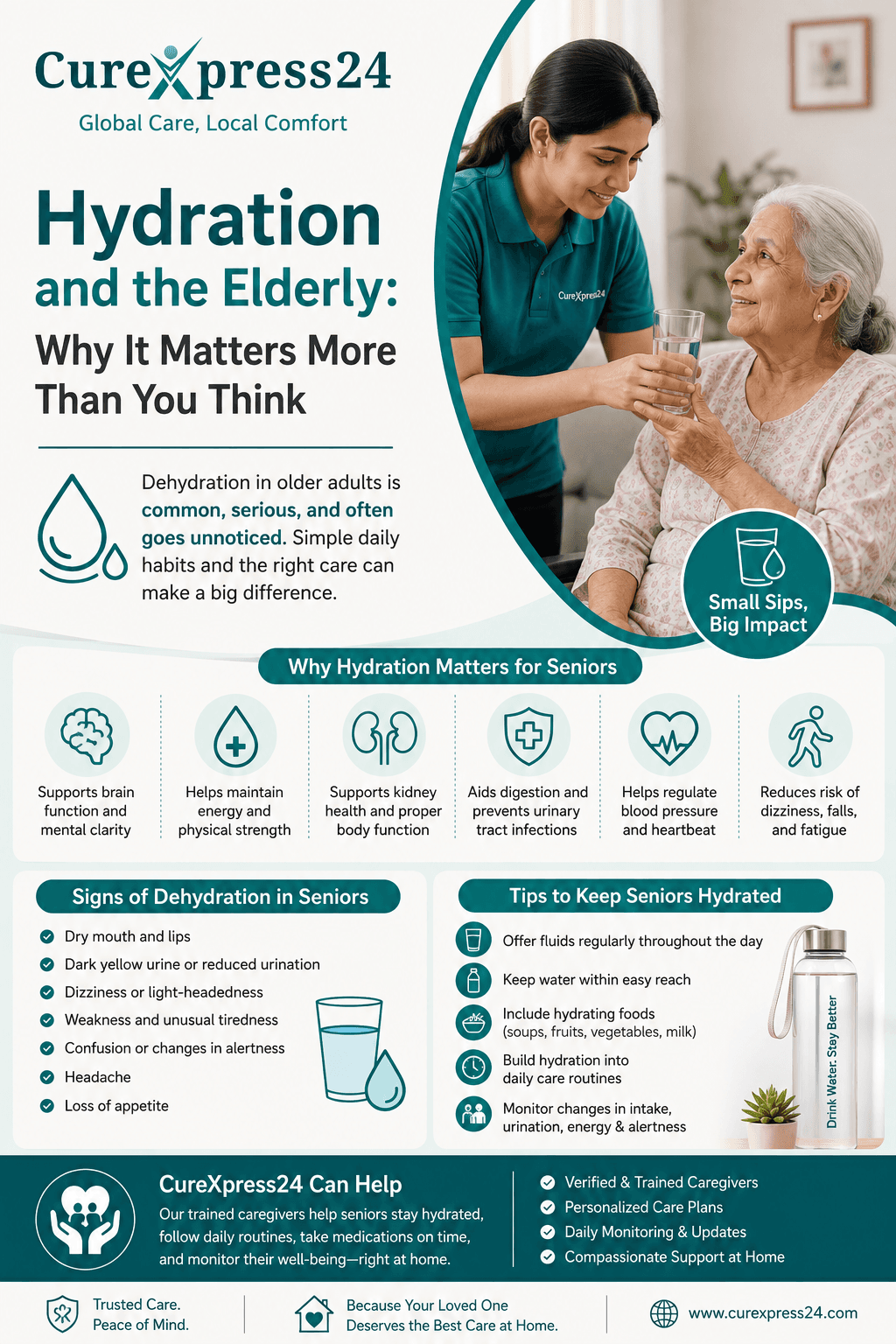
Dehydration in older adults is more common—and potentially more serious—than many families realise. As we age, changes in thirst, mobility, memory, medications and kidney function can make it harder for seniors to drink enough fluids. What starts as simply “not drinking enough water” can contribute to dizziness, weakness, confusion, falls and other health complications.
For families caring for an ageing parent at home, keeping an elderly person hydrated should be part of everyday home healthcare—not an afterthought.
Why Are Older Adults More at Risk of Dehydration?
Older adults can be particularly vulnerable to dehydration for several reasons.
1. Thirst may become less noticeable
As people age, the sensation of thirst can become less reliable. This means a senior may not feel thirsty even when their body needs more fluids.
Waiting for an older person to say, “I am thirsty,” therefore isn't always the best hydration strategy.
2. Mobility problems can make drinking difficult
A senior with arthritis, weakness, stroke-related mobility problems or limited movement may find it difficult to get up repeatedly to reach the kitchen or bathroom.
Some older adults may also deliberately drink less because they are worried about needing to use the toilet frequently.
3. Memory problems can affect fluid intake
People living with cognitive impairment or memory problems may forget to drink, forget when they last had fluids, or need regular reminders.
This is one reason hydration monitoring for elderly people can be particularly important when they live alone.
4. Illness and medications can increase the risk
Fever, vomiting, diarrhoea and other illnesses can increase fluid loss. Certain medicines, including some diuretics, can also affect fluid balance.
Older adults with medical conditions such as kidney or heart problems may have specific fluid requirements, so families should follow the treating clinician's advice rather than assuming everyone needs the same amount of water.
How Common Is Dehydration in Older Adults?
The numbers show why this deserves attention.
A recent systematic review and meta-analysis found that approximately one-quarter to one-third of hospitalised adults aged 65 and older were likely to have low-intake dehydration at admission. Across the highest-quality studies included in the review, 5,039 of 14,398 participants were dehydrated.
An earlier prospective study of older hospital patients found that 37% were dehydrated at admission, and those who were dehydrated had a significantly poorer outcome.
These figures don't mean that every older person living at home is dehydrated. They do, however, highlight how easily inadequate fluid intake can become a serious issue—particularly when an older adult is already unwell or dependent on others for daily care.
Signs of Dehydration in Seniors to Watch For
Dehydration doesn't always begin with an obvious emergency. Families and caregivers should watch for changes such as:
Dry mouth or tongue
Darker urine or reduced urination
Dizziness or light-headedness
Weakness or unusual tiredness
Headache
Confusion or changes in alertness
Rapid heartbeat
Reduced appetite
Increased sleepiness
Difficulty maintaining normal activity
Some of these symptoms can have many possible causes, particularly in older adults. New or significant confusion, fainting, severe weakness, inability to drink, very little urine, or other concerning symptoms should be medically assessed promptly.
The National Institute on Aging also identifies symptoms such as dry mouth, dizziness and rapid heart rate as possible signs of dehydration.
How to Keep an Elderly Person Hydrated at Home
The good news is that hydration can often be incorporated into a senior's daily routine.
1. Don't wait until they feel thirsty
Offer fluids regularly throughout the day instead of relying entirely on thirst.
A simple routine can include fluids around:
Waking up
Breakfast
Mid-morning
Lunch
Afternoon
Evening
Meals and snacks
The appropriate amount varies by person, so anyone with a fluid restriction or medical condition should follow their healthcare professional's recommendation.
2. Keep water within easy reach
Place a clearly visible bottle, glass or lightweight cup where the person spends most of their time.
For someone with limited mobility, simply making fluids easier to reach can remove an unnecessary barrier.
3. Make fluids more appealing
Water isn't the only way to consume fluids.
Depending on the person's dietary and medical requirements, options may include:
Water
Milk
Soups or broths
Hydrating foods such as fruits and vegetables
Unsweetened or low-sugar beverages
Other fluids recommended by their healthcare professional
The NIA recommends drinking plenty of water throughout the day to help maintain hydration and supports incorporating nutritious foods into an older adult's diet.
4. Build hydration into daily care routines
Instead of treating drinking water as a separate task, connect it with activities that already happen every day.
For example:
Breakfast → medication routine → hydration reminder → short walk → hydration reminder
This makes hydration more consistent and easier for both seniors and caregivers to remember.
5. Monitor changes—not just individual drinks
For an older adult who needs assistance, caregivers can pay attention to:
How frequently they are drinking
Whether their normal fluid intake has changed
Urination patterns
Appetite and energy levels
New dizziness or weakness
Changes in alertness or behaviour
A sudden change from the person's normal pattern can be more useful than simply asking, “Did you drink enough water today?”
Hydration and Fall Prevention
This is another reason hydration deserves attention in elderly care.
Dizziness and light-headedness can affect balance, and falls can have serious consequences for older adults. The National Institute on Aging notes that falls become increasingly dangerous with age and can lead to fractures, hospitalisation and disability.
For seniors who already have mobility or balance difficulties, maintaining appropriate hydration is one part of a broader home safety and care plan.
When Should You Contact a Doctor?
Don't try to manage significant dehydration at home if an older adult is seriously unwell.
Seek medical advice promptly if there is:
Severe or worsening confusion
Fainting or significant dizziness
Inability to keep fluids down
Very little or no urine
Severe weakness or unusual drowsiness
Rapid deterioration
Symptoms occurring alongside significant vomiting, diarrhoea or fever
People with conditions such as heart failure or kidney disease may have individual fluid restrictions, so more water is not automatically better. Their hydration plan should be personalised by their healthcare team.
Hydration Is Easier When Someone Is There to Notice
One of the biggest challenges with elderly care at home isn't necessarily knowing that hydration matters.
It's making sure someone notices when the routine changes.
An older adult living alone may forget to drink. A family member may call once a day but have no way of knowing what happened between calls. A caregiver who spends several hours with the senior, however, can notice changes in eating, drinking, mobility, alertness and daily routines and report concerns to the family or care team.
That is where structured home healthcare can make a meaningful difference.
How CureXpress24 Can Help With Elderly Hydration and Daily Care
At CureXpress24, we believe good elderly care is not only about responding when something goes wrong—it is also about creating consistent routines that help families notice changes early.
Our home caregivers and attendants can support older adults with meal assistance, feeding support, daily activities, mobility, medication reminders, companionship and basic monitoring, with changes reported to family members and supervisors.
For families managing an ageing parent at home, this can mean having someone present who can help maintain everyday routines—including appropriate hydration as part of the person's overall care plan.
CureXpress24 also provides a written care plan, verified professionals, supervisor oversight and regular updates, helping families stay informed about their loved one's care even when they cannot be physically present every day.
Importantly, caregivers do not replace doctors or nurses. If an older adult shows concerning symptoms or requires clinical assessment, the appropriate qualified healthcare professional should be involved.
Give Your Loved One More Than Care—Give Them Consistency
Hydration may seem like a small part of elderly care, but small daily routines can have a big impact on comfort, independence and overall wellbeing.
Regular fluids. Regular meals. Regular movement. Regular observation. Regular human support.
For families caring for ageing parents, having dependable help at home can make these everyday routines easier to maintain.
CureXpress24 brings trained, verified home-care professionals closer to your family—so your loved one can receive dependable support in the comfort of home.
Need support for an elderly parent at home? Talk to CureXpress24 about a personalised home-care plan.
Arrange care with clarity
Talk through what your family needs.
Get honest guidance, a written care plan, and a clear next step from the CureXpress24 team.
Book a free consultation