Category: Elderly Care
Target Keyword: Fall Prevention at Home
Meta Title: Fall Prevention at Home: A Complete Room-by-Room Safety Checklist for Seniors
Meta Description: Learn how to prevent falls at home with this room-by-room safety checklist. Discover practical tips to create a safer living environment for elderly family members.
Fall Prevention at Home: A Room-by-Room Safety Checklist
Growing older brings wisdom, experience, and cherished memories—but it can also increase the risk of falls. According to health experts, falls are among the leading causes of injury, hospitalization, and loss of independence in older adults. The encouraging news is that most falls are preventable with simple modifications to the home.
Whether your loved one lives independently, with family, or receives professional home healthcare, making the home safer can significantly reduce the risk of accidents and improve confidence in daily activities.
This comprehensive room-by-room safety checklist will help you identify potential hazards and create a secure environment for elderly family members.
Why Fall Prevention Matters
A single fall can have serious consequences for seniors, including:
Hip fractures
Head injuries
Reduced mobility
Fear of walking independently
Long-term hospitalization
Loss of confidence
Increased dependence on caregivers
Preventing falls isn't only about avoiding injuries—it's about preserving independence, dignity, and quality of life.
Common Reasons Seniors Fall at Home
Many falls occur due to everyday hazards that often go unnoticed.
Common causes include:
Poor lighting
Slippery floors
Loose rugs
Uneven flooring
Cluttered walkways
Inappropriate footwear
Muscle weakness
Poor balance
Vision problems
Side effects of medications
The first step toward prevention is identifying these risks.
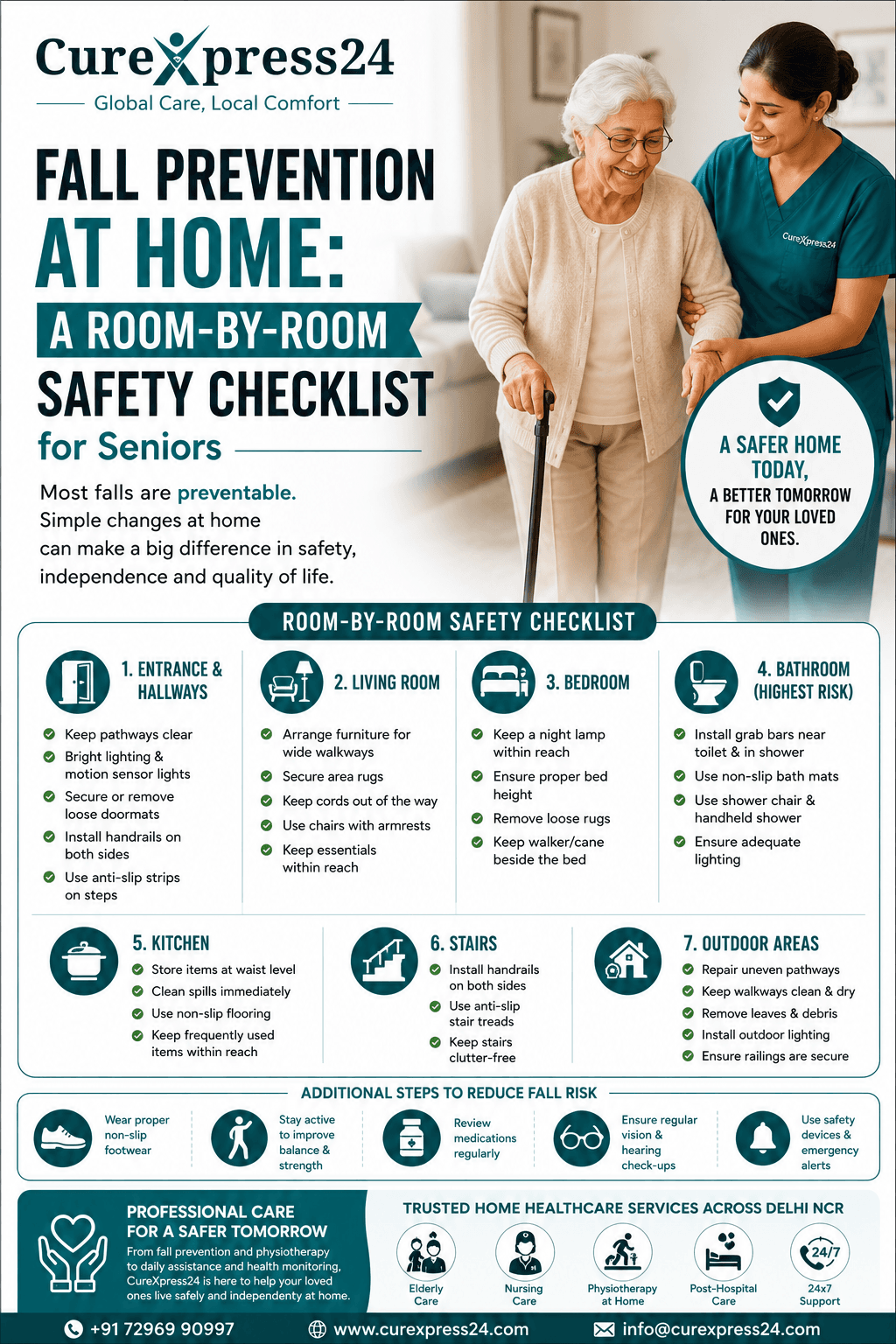
Room-by-Room Fall Prevention Checklist
1. Entrance & Hallways
The entrance is the first place where slips and trips can occur.
Safety Checklist
✔ Ensure pathways are clear of shoes, bags, and clutter.
✔ Install bright lighting near the entrance.
✔ Use motion-sensor lights for nighttime visibility.
✔ Secure or remove loose doormats.
✔ Repair uneven steps or cracked flooring.
✔ Install sturdy handrails on both sides of stairs.
✔ Use anti-slip strips on outdoor steps.
2. Living Room
The living room should be comfortable—but also obstacle-free.
Safety Checklist
✔ Arrange furniture to allow wide walking paths.
✔ Remove unnecessary furniture.
✔ Keep electrical cords against walls.
✔ Secure area rugs with non-slip backing.
✔ Choose chairs with armrests to make standing easier.
✔ Keep frequently used items within easy reach.
✔ Ensure remote controls, phones, and emergency contacts are nearby.
3. Bedroom
Many falls occur while getting in or out of bed, especially during the night.
Safety Checklist
✔ Keep a bedside lamp within easy reach.
✔ Install motion-sensor night lights.
✔ Ensure the bed height allows feet to touch the floor comfortably.
✔ Remove loose carpets.
✔ Keep walking aids (walker or cane) next to the bed.
✔ Place a phone within reach.
✔ Avoid storing frequently used items on high shelves.
4. Bathroom (Highest Risk Area)
Bathrooms are one of the most dangerous places for older adults because water creates slippery surfaces.
Safety Checklist
✔ Install grab bars near the toilet.
✔ Install grab bars inside the shower.
✔ Use non-slip bath mats.
✔ Place anti-slip strips inside the shower.
✔ Install a raised toilet seat if needed.
✔ Use a shower chair.
✔ Install a handheld showerhead.
✔ Ensure adequate lighting.
✔ Keep toiletries within arm's reach.
5. Kitchen
Cooking should remain enjoyable without unnecessary risks.
Safety Checklist
✔ Store everyday items at waist level.
✔ Avoid using stools or ladders.
✔ Clean spills immediately.
✔ Keep frequently used cookware easily accessible.
✔ Use non-slip flooring.
✔ Keep appliance cords away from walking paths.
✔ Ensure sufficient lighting over countertops.
6. Stairs
Stairs account for many serious injuries among seniors.
Safety Checklist
✔ Install sturdy handrails on both sides.
✔ Repair loose steps immediately.
✔ Add anti-slip stair treads.
✔ Improve lighting.
✔ Mark the edge of each step with contrasting tape if vision is impaired.
✔ Never leave objects on the stairs.
7. Outdoor Areas
Safety shouldn't stop at the front door.
Safety Checklist
✔ Repair uneven pathways.
✔ Remove moss or slippery surfaces.
✔ Keep walkways free of leaves and debris.
✔ Install outdoor lighting.
✔ Use anti-slip surfaces near entrances.
✔ Ensure railings are secure.
Improve Balance and Strength
Home modifications are important, but maintaining physical strength is equally essential.
Regular activities such as:
Gentle stretching
Walking
Chair exercises
Balance training
Physiotherapy
can significantly reduce fall risk.
Professional physiotherapy can also help seniors improve coordination, flexibility, muscle strength, and confidence while walking.
Review Medications Regularly
Some medications can increase the risk of falls by causing:
Dizziness
Low blood pressure
Sleepiness
Blurred vision
Loss of balance
Always consult your doctor before making changes to any medication, and schedule regular medication reviews—especially if multiple prescriptions are involved.
Don't Ignore Vision and Hearing
Poor eyesight and hearing can make it difficult to detect hazards.
Ensure regular:
Eye examinations
Hearing assessments
Updated prescription glasses
Proper lighting throughout the home
Even small improvements in visibility can greatly reduce fall risk.
Choose the Right Footwear
Footwear plays a surprisingly important role in preventing falls.
Choose shoes that:
✔ Fit properly
✔ Have non-slip soles
✔ Provide good ankle support
✔ Are lightweight
Avoid:
Loose slippers
High heels
Walking barefoot on smooth floors
Socks without grip
Technology Can Improve Safety
Modern safety devices can offer added peace of mind for seniors and caregivers.
Consider:
Medical alert systems
Fall detection devices
Smart lighting
Motion sensors
Video doorbells
Emergency response buttons
These technologies can help ensure quick assistance in case of an emergency.
When Professional Home Care Can Help
If an older adult has:
Experienced previous falls
Difficulty walking
Memory-related conditions
Recovering from surgery
Requires daily assistance
Professional home healthcare services can provide personalized support, including:
Mobility assistance
Medication reminders
Personal hygiene support
Physiotherapy at home
Regular health monitoring
Companionship and supervision
Having trained caregivers available can significantly reduce fall risks while allowing seniors to continue living comfortably in their own homes.
Final Thoughts
Creating a fall-safe home doesn't require expensive renovations. Small changes—such as improving lighting, removing clutter, installing grab bars, and encouraging regular physical activity—can make a significant difference.
Every room presents opportunities to improve safety, and every preventive step contributes to protecting the health, confidence, and independence of your loved ones.
A safer home today can help prevent a life-changing injury tomorrow.
Frequently Asked Questions (FAQs)
1. What is the biggest cause of falls among older adults?
Common causes include poor lighting, slippery floors, muscle weakness, balance issues, certain medications, and cluttered living spaces.
2. Which room is the most dangerous for seniors?
The bathroom is considered the highest-risk area due to wet, slippery surfaces and limited support while bathing or using the toilet.
3. How can families reduce fall risks at home?
Families can improve lighting, remove trip hazards, install grab bars, secure rugs, keep pathways clear, and encourage regular exercise and physiotherapy.
4. Can physiotherapy help prevent falls?
Yes. Physiotherapy improves strength, balance, flexibility, and coordination, reducing the likelihood of falls and increasing confidence in daily movements.
5. When should I consider professional elderly care at home?
If a senior has frequent falls, limited mobility, chronic health conditions, or needs help with daily activities, professional home healthcare can provide safe and reliable support.
About CureXpress24 Home Healthcare
At CureXpress24, we believe seniors deserve to age safely and comfortably in the place they know best—their home. Our experienced caregivers, nurses, and physiotherapists provide compassionate, personalized care tailored to each individual's needs across Delhi NCR. From mobility assistance and fall prevention to post-hospital recovery and daily living support, we're committed to helping older adults maintain their independence with confidence.
Need trusted elderly care at home? Contact CureXpress24 today to learn how our home healthcare services can support your loved ones.
Arrange care with clarity
Talk through what your family needs.
Get honest guidance, a written care plan, and a clear next step from the CureXpress24 team.
Book a free consultation