
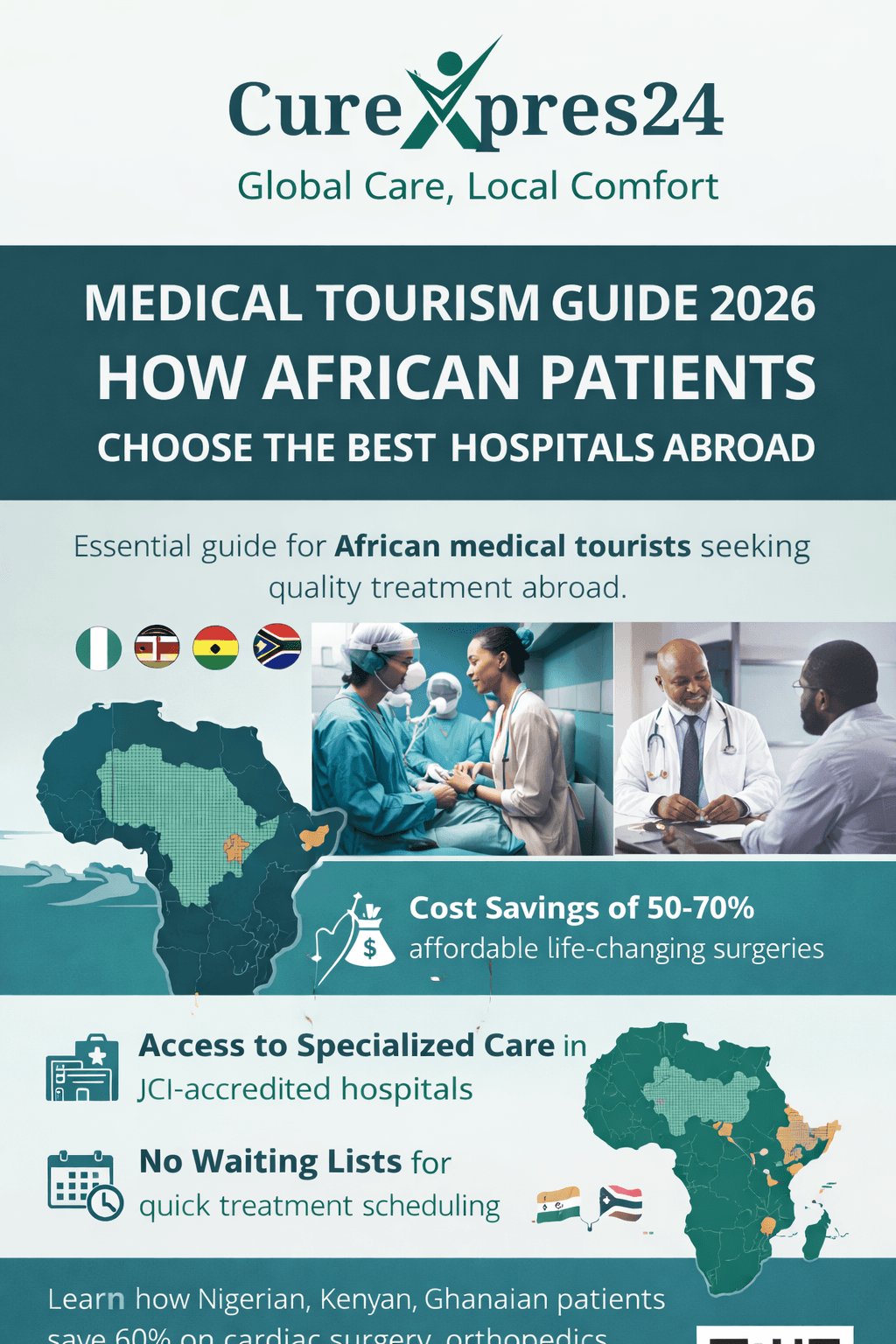
Every year, thousands of patients from Nigeria, Kenya, Ghana, South Africa, and across Africa travel abroad for medical treatment—seeking better quality care, advanced procedures unavailable at home, or significant cost savings. Whether you need cardiac surgery, orthopedic procedures, cancer treatment, or cosmetic surgery, choosing the right international hospital is the most critical decision in your medical journey.
This practical guide shows African medical tourists how to select safe, quality hospitals abroad while avoiding common pitfalls that could compromise your health and drain your finances.
Why African Patients Choose Medical Tourism
Medical tourism from Africa has grown dramatically because it solves real healthcare challenges:
- Cost Savings: Savings of 50-70% make life-changing procedures affordable. Cardiac bypass surgery costs $7,000-12,000 in India versus $60,000+ in Western countries.
- Access to Specialized Care: Complex cardiac procedures, organ transplants, and advanced cancer treatments often aren't available locally.
- No Waiting Lists: Instead of waiting 6-12 months in public systems, African patients can schedule procedures within 2-4 weeks abroad.
- Quality and Technology: International hospitals invest heavily in the latest medical technology and maintain rigorous quality standards.
Step 1: Start With Clear Medical Documentation
Your hospital search begins with comprehensive medical records from your physician in Lagos, Nairobi, Accra, or wherever you're based. Compile your complete medical history, recent diagnostic tests (blood work, X-rays, MRI, CT scans), current medications, and your doctor's treatment recommendations.
Have all documents professionally translated to English if they're in French, Arabic, or local languages. Send these to prospective hospitals 2-4 weeks before travel so they can assess your case and provide accurate treatment plans.
Step 2: Choose Your Destination Strategically
Different countries excel at different specialties and offer varying advantages for African patients:
- India: Best for cardiac surgery, orthopedics, cancer treatment, and transplants. Offers the lowest costs and straightforward medical visas (3-5 days e-visa).
- Turkey: Excels in cosmetic surgery, hair transplants, dental implants, and orthopedics. Istanbul offers European standards with competitive pricing.
- Thailand: Strong in complex surgeries and premium healthcare experiences, with excellent hospitality.
- UAE (Dubai/Abu Dhabi): Premium care closer to home for East African patients, though costs are higher than India or Turkey.
Step 3: Verify Hospital Accreditation Rigorously
International accreditation is your primary quality assurance. Look for Joint Commission International (JCI) accreditation, which represents the gold standard worldwide. Verify credentials directly at the JCI website rather than relying solely on hospital claims.
Step 4: Research Your Surgeon's Credentials
Your outcome depends primarily on your surgeon's skill. Investigate their educational background—many top surgeons treating African patients trained in the US or UK. Ask directly: How many times have they performed your specific procedure? Ensure your surgeon speaks English clearly for direct communication.
Step 5: Analyze Real Patient Experiences
Expand your research to independent platforms like medical tourism forums and Facebook groups for Nigerian or Kenyan healthcare seekers. Pay special attention to experiences from fellow African patients regarding cultural sensitivity, dietary accommodations (halal food, African cuisine), and post-treatment support.
Step 6: Understand Complete Costs Transparently
Request itemized estimates in US dollars breaking down procedure fees, surgeon fees, hospital stay, and medications. Budget comprehensively beyond medical costs:
- International flights ($400-1,500)
- Accommodation ($30-150 per night)
- Visa fees and local transport
- Contingency funds (budget quoted costs plus 50%)
Step 7: Assess International Patient Support Services
Evaluate how quickly hospitals respond to inquiries. Do they assign dedicated case managers? Can they arrange airport pickup, SIM cards, and interpreter services? CureXpress24 serves as your comprehensive support system, ensuring seamless coordination from initial inquiry through complete recovery.
Step 8: Plan for Contingencies and Complications
Consider specialized medical tourism insurance to cover potential complications. Coordinate with your home doctor before traveling and share your treatment plan for seamless follow-up care. Build 30-50% extra time into your travel plans for recovery.
Step 9: Prepare Thoroughly Before Departure
Handle visa applications 3-4 weeks before travel. Notify your bank about international transactions, pack strategically (comfortable clothing, medications), and make detailed communication plans with family members.
Why African Patients Choose CureXpress24
CureXpress24 was founded specifically to serve medical tourists across Africa. We are not just a booking service—we are your dedicated healthcare partner.
- Vetted Partnerships: We work with JCI-accredited hospitals in India, Turkey, Thailand, UAE, and Malaysia.
- Full Coordination: We handle visas, flights, airport pickups, and medical record translation.
- Zero Cost to Patients: We offer free initial consultations and transparent package prices.
Quick FAQ for African Medical Tourists
Q: How much can I save with medical tourism?
A: Expect 50-70% savings. Cardiac surgery in India costs $7,000-12,000 vs $60,000+ in the West.
Q: Which country is best for African patients?
A: India leads for cardiac and orthopedics; Turkey excels for cosmetic and dental.
Q: Is it safe?
A: Yes, when choosing JCI-accredited hospitals and using experienced facilitators like CureXpress24.
Ready to explore your options? Contact CureXpress24 today.